
4 Kasım 2012 Pazar

Passive Buildings vs Active Marketing: What's In a Name?

To contact us Click HERE
First published by Greenbiz 2011-08-17 and covered by Treehugger 

Part 1
"Passive" construction is an innovative building technique that reduces energy requirements for heating, cooling and ventilating up to 80 percent. The occupants are more comfortable since a passive building provides consistent temperatures, eliminates drafts and circulates fresh, filtered air. Impressive!

Would You Name Your Concept "Inert" or "Inactive"?
The name passive construction is from the German passive building movement -- PassivHaus. The term "passive" is meant to convey that the building uses mostly non-mechanical methods for heating, cooling and ventilation. This is in contrast to the typical modern building where "active" mechanical systems do most of the work.

Although scientifically correct, the name "passive" creates a poor first impression with an English speaking non-technical audience. Passive is usually used when you want to describe someone or something that is submissive, inert or inactive. Not exactly a word that triggers interest. "Passive" extinguishes any thoughts of innovation or quality.

With A Poor Name, the Consumer May Tune Out Before You Can Educate
Some may think that with solid marketing a poor name can be overcome. The effort is likely to be considerable because most of us use shortcuts to manage complexity. A name is one of those shortcuts.
  • Is "Jennifer" more attractive than "Gertrude"? Yes. Researchers Willis and Henderson found an attractive name makes the person seem more attractive. When showing participants unnamed photos of two attractive women, both received equal votes when asked who is "most attractive". The results changed dramatically when labeled "Jennifer" and "Gertrude." "Jennifer" was then selected 60 percent more frequently.
  • Can "free" be a poor offer? Yes. The founders of "free software" movement thought they had the perfect name. But corporate and other customers were wary of a product that was free. Free software took off when it was rebranded as "open source".
  • Is "Caverject" a new James Bond weapon? No, it is an injectable erectile dysfunction drug. Three years after Caverject's launch, Pfizer planned a new approach to market directly to consumers. Pfizer's customer focus paid off. The new drug was christened "Viagra."

With limited opportunity to gain the consumer's attention, why waste a marketing effort to correct a deficit that can be easily turned into an asset?

But Is Marketing Even Appropriate?
Some may find marketing distasteful since marketing has been used to hard-sell products that may be dubious at best or outright harmful for the consumer and the environment.

Philip Kotler, the father of modern marketing, explains that virtuous "Marketing is the art of creating genuine customer value. It is the art of helping your customers become better off."

The intention is to practice virtuous marketing to get more sustainable practices and products adopted. The term "passive," used in this context, requires a detailed explanation before most people get it. In the long run, poor marketing will likely hinder and great marketing will help the acceptance of passive and other green buildings.

First Things First: Define the Marketing Strategy
The name is just one part of the marketing mix and to be most effective it should complement the overall marketing strategy.

Reis & Ries advised in the marketing classic The Origins of Brands to first find weaknesses in the leading brand. Then show the consumer how the new brand is the next revolutionary step and diverges from the old category. Brands that excelled at this repositioning are:
  • Starbucks robust taste diverges from regular (weak) coffee
  • Mercedes / Lexus (next generation of luxury) diverges from Cadillac / Lincoln (your dad's version of luxury)
  • Silk soy (nature's perfect protein) milk diverges from traditional (lactose) milk
The passive house marketing was on the right track. It intuitively tried to find an opposing position to exploit weaknesses of the leader by comparing itself to the active house. The strategy was sound, the execution was poor. Unfortunately "active / passive" is terminology only a mechanical engineer understands in the right way.

Let's explore potential brand positions by contrasting the mechanical house --- the current standard to the energy efficient house. This exercise is to find opposing attributes.
figure 1

In part 2, we will define three brand positions from the set of opposing attributes. Read more >>


Imagine Your Project's Successful AdoptionContact me to understand how to position your project for success claudia@g3biz.com


How SAP's Software Benefits Poor Rural Women In Ghana

To contact us Click HERE
First published by GreenBiz 2012-01-20 
Fatima Abdulai is a wife, mother and the first link in the shea supply chain. The fruit she gathers in the northern Ghana bush is the source of shea butter -- the luxurious ingredient in cosmetics and chocolates.

Fatima Abdulai is one of millions of poor rural women who scrape out a living where they find opportunity. In Ghana, the opportunity is the shea nut. In other places, it may be cocoa, cashews, coffee, or hand-made goods. A small loan, efficient technology, and practical advice are the support these women need to help them maximize those opportunities.

Shea trees are also valuable to the global environment. They store carbon and reduce erosion that puts dust in the air. Increasing shea's worth will ensure that the shea trees are not displaced by other cash crops which use more natural resources and create GHG emissions.
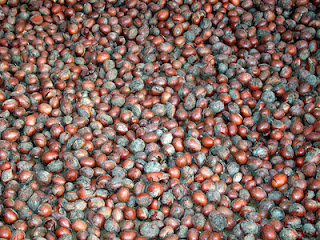
Shea has been an important rural food and medicinal for centuries. Gathering and processing shea was always considered "women's work." In the last few years, exporters started selling nuts and butter to manufacturers in the U.S., Europe and Asia. But shea pays poorly for women like Mrs. Abdulai because middlemen take advantage of individual producers.

Opportunities for women are limited in northern Ghana. For her widowed daughter-in-law, shea is her primary source of income. If Mrs. Abdulai earns enough with shea and her other ventures, she is able to continue her children's secondary education. The U.N. reports that secondary school enrollment is about half the national average in northern Ghana where Mrs. Abdulai resides.

After learning about women like Mrs. Abdulai, SAP -- the business software giant -- sought to help as part of its corporate social responsibility program. But SAP wanted to make more than a financial contribution. SAP believed that its business management technology "that helps companies run better" could be applied to the shea trade.

Improved agricultural trade could benefit more than a billion people who live in poverty in rural areas. "Agriculture is an engine for growth and poverty reduction..." states a World Bank report [PDF], "Research has shown that every dollar of growth from agricultural products sold outside the local area in poor African countries leads to a second dollar of local rural growth."

SAP partnered with PlaNet Finance, an international non-profit that specializes in microfinance and technical assistance. PlaNet welcomed SAP's hands-on approach.

"We find that companies that put sweat equity into their social projects", said Ivana Damjanov, deputy director of operations, PlaNet Finance, "are more engaged and stay with it for the long-term."
Both partners found the basics were in-place in rural Ghana for the project to succeed; political stability, growing mobile communications infrastructure, and a product with demand on the global market.

SAP recruited a few of its top employees for 6-month fellowships on the Ghana project. During field visits, they learned from Mrs. Abdulai and other women that providing solutions would require more than technology to succeed.

Mrs. Abdulai typically gathers at dawn so she can help her husband on his small farm and manage the household. It is a 15 minute walk to the shea trees where she collects 30 to 35 pounds of fruit before she heaves her basket to her head and trudges back to the village. In the course of the season, she collects almost a ton of fruit.

Vipers, mambas and scorpions lurk in the elephant grass where Mrs. Abdulai collects shea. 1,040 snakebite cases were recorded last year by Northern Regional Ghana Health Service, but incidents are believed to be underreported. Mrs. Abdulai is lucky; she has avoided a snake bite, so far. Unlike her daughter, who was bitten and others who perished.

When she returns home, the next step is to remove the skin and fruit pulp to expose the shea nut, which resembles a spherical avocado pit. Mrs. Abldulai saves some of the fruit, which sustains the family in the "hungry season" when crops have just been planted.

It takes up to two months of drying before the nuts are ready to be transformed into butter. Rushing the drying may also reduce quality. During bad years, Mrs. Abdulai was forced to sell the shea nuts prematurely. She was desperate for cash to buy food, school supplies and other essentials.


The value of shea nuts are diminished considerably with an early sale: A Stanford University study found that the price differential is as much as 82 percent [PDF] for premium nuts that are dried properly.

Because of poor record keeping, Mrs. Abdulai worried that not all of the nuts would be accounted for and she would be short-changed. She has good reason to worry, it turns out: "Some three-quarters of all adults in the north are illiterate," reports the U.N. -- including Mrs. Abdulai and the women in her village who do shea work.

Brokers come to the villages since it is difficult to get to the market. The brokers buy the small batches of butter and nuts and then sell at a large mark-up to the exporters or other manufacturers. Mrs. Abdulai's cache of nuts in past seasons was only enough to partly pay for one child's tuition. She heard that manufacturers pay much more than what the brokers offer the small producers, but what could she do.

Working with SAP and PlaNet Finance colleagues around the globe, the project team developed a holistic solution to resolve the core issues.
• Dangerous working conditions: Provide boots, gloves and coats to protect women gathering shea fruit.
• Uneven cash flow: Make microloans to support families until nuts are sold at full market value.
• No data: Build an order management tool --- Rural Sourcing Management (RSM) --- to capture and share key data about the product and market prices. The tool uses mobile technology, cloud computing and SAP software. The RSM tool is used by field officers, who are literate and able to use the technology after training.
• Product quality: Educate women on how to improve quality to satisfy the standards set by highest paying customers.
• Weak position as sellers: Set up an association, Star Shea Network, among small shea producers to eliminate the brokers. Recruit a more educated person in the community to record notes from meetings and assist with bookkeeping. Negotiate a long-term contract with a manufacturer seeking organic, fair trade and high-quality shea nuts and butter. The detailed product data provided by the new system and consistent quality were key factors in closing the deal.
Under the new program, Mrs. Abdulai joined the association. She qualified for loans to purchase additional tailoring machines for her small business and protective gear for picking. She has repaid these loans. With the additional income she earned, Mrs. Abdulai paid school fees for her three children. Mrs. Abdulai is grateful that the program "opened up her shea business to the world."

The program also cultivated Mrs. Abdulai's leadership skills. She said, "I used to be very shy, but now I educate my colleagues, organize the association leaders and assist them in carrying out their roles."


Imagine Building an App to Connect With Your Customers and StakeholdersContact me to understand how to develop a simple app that compliments your brand strategyclaudia@g3biz.com
To learn more about other IT Green services >> 

What's the Right Model for Acquiring Professional Services Contractors?

To contact us Click HERE

Is acquiring a paperclip the same as acquiring an IT specialist? Many large companies acquireprofessional service contractors --- such as IT, marketing and HR --- using asimilar program as they use when buying supplies, equipment, raw materials ormerchandise.
Yet many hiring managersand contract recruiters find the hiring process is unsatisfactory due to timespent vetting candidates or removing contractors that are a poor fit.
So why is the suppliespurchasing model not as effective for professional contractors? An importantprinciple of systems thinking is to apply the right model for the environment.What fits for one context when transplanted to a different context --- evenwhen they appear similar --- may cause problems.
This article exploresthe rationale for the current model, issues and a better approach.  
Rationale for Paper Clip Purchasing ModelBusinesses noticed thatcosts escalate when individual departments acquire their own supplies. I'veseen that first hand at a company where I worked. Identical raw materials fromthe same vendor were sold to various departments at wildly different prices.One company uncovered that they were buying 424 slightly different versions ofa standard gloves used by its factory workers. Compared to the lowest cost glove,the most expensive version was 340% higher.  [1]
The solution to such amess is to consolidate the number of vendors and products, leverage the firm's buying power to negotiatevolume discounts and insert a strong centralized purchasingfunction. Often systems are implemented to manage the process. 
Given the success ofthis approach, it is natural to apply it to a similar looking mess as theacquisition of talent. The purchaser / product user is the hiring manager.The providers are the professional services contract recruiting firms. Theproduct is the IT, marketing or HR expert. The mess is created whenindividual hiring managers develop relationships with their favorite providers. 
How are Paper Clips and IT Specialists Different?Although similar on thesurface, there are important differences between the acquisition models for suppliesand talent. Let's explore where they are different and where they are thesame. 
1. Product  For a paper clip, glovesor other standard products, it is straightforward to specify objective criteriato judge the product. Mature products tend to be commodities. This is theopposite with talent.
Hiring managers providefuzzy specs. Either the specs are too vague that too many ill-suited candidatesare presented; or so narrow and specific that few candidates can be found.
Each candidate is aunique combination of experiences, skills and personality quirks. The good recruitersinterpret the fuzzy requirements to find the right talent. 
When purchasing puts awall between recruiters and hiring managers, the dynamics change fromrelationships to checking the box that the candidate meets the requisitionrequirements often leading to disappointing results.
2. Negotiations Decentralized purchasingallows the provider to exploit those product users who arepoor negotiators. This is true for both supplies and talent. 
3. Cost Structure Centralized purchasingincreases the volume to each preferred provider and more volume reduces theprovider's costs and that savings can be shared with the purchaser. Althoughtrue for standard supplies, surprisingly this is not the case for talent. 
Unlike paper clips, consolidatingto fewer providers may create less incentive for the contract recruiter.
  •  Each search for a contract recruiter is a new competition, whilepaper clips are bought in bulk.
  • With centralized purchasing, the contract recruiter is likely to competewith many more firms for that search. Previously the hiring manager had a fewfavorites.
  • With more competition for each opening, there is less incentivefor the contract recruiter to work diligently on the opening since many otherfirms are going after the same pool of candidates. It becomes a race to presentas many candidates as possible rather than a few quality candidates.


Acquiring more talentfrom a particular contract recruiter does not reduce costs dramatically sinceeach new search incurs its own set of costs. Also the professionals have amarket rate and are not under the control of the contract recruiter.  
Contract recruiters havesome flexibility on price. They may reduce their margin. The best way to reduceprice is to remind providers that there is a competitive pool of other vendorswaiting to replace them. 
What Model Works Better for TalentRussell Ackoff, apioneering system thinker, cautioned against using mechanistic type models suchas the purchasing of paper clips to humans.  “In the long run, such mismatches produce lessdesirable results because critical aspects of the social system are omitted.”continues Ackoff “The more skilled the workers, the harder they are to replace.”[2]
A better model forcontract talent acquisition is a hybrid approach. Specifically:
  • Centralized purchasing to resolve the issue where product users are on average poorer negotiators than the purchasing professionals. Centralized purchasing would define consistent contract terms / conditions and rate structure. Systems are useful to manage. 
  • The hiring manager and contractor recruiters would build strong relationships to facilitate matching the best talent for an opening.  
This hybrid approachallows each group to do what they do best while eliminating weaknesses of thepaper clip model.
References      1.  The gloves example was used in the book by the Heath Brothers Switch: How to Change Things When Change is Hard.
2.  Systems thinking is highlighted in Russell Ackoff’s book Re-creating the Corporation.

How to Use Sampling to Eliminate Manual Census

To contact us Click HERE
I was chatting with the transportation director for a large organization about its commute program. Twice each year, he is required to take a census and capture each employee's transportation mode for 5 consecutive days. [1] Making his job more difficult, he must discount students and visitors.

Statistics Makes The Job Easier & More Accurate

Currently, human counters armed with clipboards complete the inventory. After the data is captured, it is then entered into a simple application to provide reports.

This census requirement is a great application for statistical sampling to make the job easier and less costly. Although the example is for a commute program, the 3-step process outlined in the next sections can be used broadly.

The leverage point is exploiting the statistical “law oflarge numbers” or Bernoulli’s Law. Bernoulli proved that when the amount of data islarge, the results of a random sample are nearly the same as theresults when using all the data. 

There may be small statistical variations when using random sampling, but it provides sufficient precision forperforming most analysis. The accuracy depends on the sample size. A 1 per cent sample provides more than 99 per cent accuracy.

In the case of counting commuters, random sampling will likely improve accuracy since the manual counters may miss commuters, incorrectly add visitors or students, unable to determine impact of commuters who are travelling or on vacation and incorrectly categorize the transportation mode. 

Step 1: Build Your Data Set

The sampling process would use HR data as its source. [2] It is critical to get all the members of the set, otherwise the sample may be skewed. 

The notorious failed prediction of the 1948 Presidential election provides an illustration. Pollsters had Thomas E. Dewey beating Harry S. Truman, only to be embarrassed by the actual voter turn-out. 

The trouble was the pollsters had conducted their poll by phone. Not every household had a phone in 1948 and more phones were owned by Republicans who favored Dewey, which skewed the sample.

In the case of commuter inventory, there is often a different source for contractor data than employee data.  Multiple sources may be required to find all the commuters. 


Step 2: Randomly Select Your Sample

Once all the commuter data is compiled, the next step is to randomly select a subset for follow-up polling. For example, Excel has a built-in sampling function. If not already available with the products owned, random sampling algorithms are available for a small fee or through open-source. 

It is critical to avoid special sampling criteria or errors will be introduced. Letting some departments or executives avoid the follow-up call would invalidate the process.


Step 3: Poll your Sample Set

The final step is to contact individuals that were selected from the data to sample and determine their commute mode for each day of the week. This could be automated by sending an email and explaining the new process and how it reduces costs and improves accuracy. An introduction to department leaders prior to the follow-up could enlist them to communicate and help with follow-up.

Of course, there will be laggards who do not respond and follow-up with a personal phone call may be necessary. If some cases, their managers may be needed to enforce. Even with this extra effort, it is much less intensive that counting each commuter. If 1% sample size is selected and even if 20% require follow-up, that is only 2 out of 1,000 that would require contacting which is manageable.


Statistics - The 1% Solution

This new statistical approach provides one other benefit. Polling could be completed more frequently to understand how commute patterns change. They could measure during different seasons to determine if fewer bikers due to inclement weather in the winter. They could measure the effectiveness of new marketing programs. 

A sustainable commute program is all about efficiency. Using the power of statistics makes the analysis of the commuter data just as efficient.   
  

Notes 

1. Background on the commuter inventory requirements 
The sustainable commute program receives some government funding which is common among these types of programs. This program also was part of an expansion agreement between the county and the organization. The county only allowed expansion if the organization could avoid increasing already clogged traffic arteries
.  
2. Proper handling of data
Since this is HR data, remember to pull only data that is required to prevent information security issues. The data should be limited to employee name, unique id, and work contact information.

Adding to Bittman's Dream Food Label

To contact us Click HERE
From The New York Times [1]
In today’s New York Times, Mark Bittman proposeda new food label. [1] Bittman stated that the current food label is informationoverload. As a consumer Bittman said, “I want something that allows me to makea fast but enlightened choice.”
Bittman’s simpler food label would reduceconfusion among consumers. The various components that Bittman proposed areoutstanding:
  • Summarizing a great dealof data into a few categories. They are “Nutrition”, “Foodness”, and “Welfare”.
  • Rating bar
  • Color code
  • Highlight topic ofspecial concern such as “GMO”


As a change management and metrics expert, Ihave a few tweaks to Bittman’s “dream food label”.

1. Stick to Standard Scoring Techniques

    For each category, Bittman proposes a score of 1 to 5. Since there are 3 categories proposed, the total score is between 3 and 15.

    The total should add to 10. Everyone is familiar with that scoring system since it is consistent with our base 10 numbering system that started with our 5 fingers on each hand. A total score of 15 is too hard to conceptualize.

      2. Eliminate overlap

        "Nutrition" is a category that summarizes the “nutritional facts” listed on the current food label. “Foodness” is a new concept that measures how closely the product is to food found in its natural state. 

        To see how “foodness” may be applied to food products, consider an apple

        • 5 points - An apple  
        • 4 points - Dried apple, apple juice no other additives
        • 3 points - Applesauce with some sugars and additives
        • 2 points - An apple drink with some apple juice
        • 1 point   - An apple-flavored drink with no apple juice
        It seems that "nutrition" and "foodness" have a great deal of overlap. A poor "foodness" score indicates poor "nutrition". In the examples Bittman provided, the scores were identical or 20% different. e.g., tomato sauce is a 5 for "nutrition" but scored 4 on "foodnesss". I can't think of an example where "nutrition" would be "5" and “foodness” would be a "1", so I recommend eliminating since not that much extra information is provided.

        The concept of "foodness" is still important. So perhaps the two scores could be combined. Using this approach, tomato sauce earns a 4.5. And a new category name that captures "nutrition" and "foodness" could be devised. 

          3. Be careful when presenting hot topics such as "welfare"

            The "welfare" score is also a new concept. Bittman described welfare as "a measure of the impact of the food's production on the overall welfare of everything involved: laborers, animals, land, water, air, etc."
            "Welfare" --- as Frank Luntz would say --- is "a word that does not work". [2] Unfortunately "welfare" is linked to social welfare programs and using that word will trigger already strong associations. For many, those associations are negative.
            Bittman proposed adding the individual scores together to compute a grand total. Usually a total score would be simpler, but food is a highly charged topic. Not everyone yet agrees that "welfare" is important to measure. Since "welfare" still requires more public acceptance it should be kept separate.  Per my recommendation of presenting only two metrics, people can add them together if both metrics are personally meaningful.

              4. No acronyms please

                “GMO” stands for Genetically Modified Organism. Bittman referenced a study where 90% of Americans who were surveyed wished to know if their food contains genetically modified organisms.
                The study did not measure whether those 90% knew the acronym. But in general, it is unlikely and therefore dangerous to assume that everyone will know what an acronym stands for.  

                My tweak for this section is to pose as a Question: Genetically modified? Answer: Yes GMOs or No GMOs.
                I applaud Bittman for not making a value judgement on GMO. He used a neutral color code of black or white to indicate if a food contains GMO (black) or not (white). 

                  5. My Health / Our Health

                    "Nutrition / Foodness" could be named the "My Health" score. And "Welfare" could be categorized as "Our Health". These new labels capture both the personal and the community welfare.
                    Here is the updated dream label:

                    Tomato Sauce Frozen Blueberries Whole Chicken Sugary Cereal
                    My Health4.5 / 5■■■■▪ 4.5 / 5■■■■▪ 4 / 5■■■■ 1 /5■
                    Our Health
                    5 / 5■■■■■ 2 / 5■■ 1 / 5■ 3 / 5■■■
                    GeneticallyModified?
                    NO      GMOs

                    NO     GMOs

                    YES   GMOs

                    YES   GMOs

                    I offer these suggestions as a few more ideas tobuild upon. Thanks again to Mark Bittman for starting the conversation and providingan excellent foundation. 

                    References

                    1. Bittman's article "My Dream Food Label" at The New York Times >>
                    2. Frank Luntz is a Republican strategist whose research focuses on finding effective ways to communicate complex political topics. His bestseller is Words That Work. Learn more at Luntz's site >>

                    13 Ekim 2012 Cumartesi

                    new blog post

                    To contact us Click HERE
                    I follow a bunch of fake pro guys on the internet. All that they post about is how much they ride. It annoys me for some reason. I think its because I am working and not riding.

                    Anyway. Riding is fun. Yesterday we did a great ride. People's fitness is all over the place.
                    5000 feet of climbing in Pittsburgh is pretty tough, cause it is all burg's that are 400 - 500 feet at a time.
                    Distance: 60.62 mi
                    Time: 3:42:47
                    Avg Speed: 16.3 mph
                    Elevation Gain: 5,131 ft

                    The ride that crushed Babik's soul.


                    Seriously one of my life's biggest regrets at this point..

                    To contact us Click HERE
                    In 1992 Bad Religion were touring with this band Green Day. They were scheduled to play a small club in Pittsburgh called "graffiti." It maybe held 500 people? I remember not doing much in terms of school and planning on being grounded when the show was to happen. My brother bought a ticket, and I did not... Thinking that I was saving 12 dollars. Anyway I dont think that I ever showed my parents my report card that year and did not get grounded. Dang.